
Funding Success:
4 Steps
The WHC Team will lead you though the funding process, ensuring that we find options, present the best opportunities, assist where needed, and bring you to the closing table.
Follow the 4 steps below:

STEP 1: Submit Bank Statements
12 Months of Business and Personal Bank Statements: These documents prove your financial discipline. After you submit these documents, schedule a session with a WHC Advisor.
STEP 2: Schedule a Zoom Session with a WHC Advisor
Let's discuss what your bank statements show and how much funding you need to achieve your business goals. After we meet, we will require more documentation to move the loan packet to underwriting.
STEP 3: Submit Documentation
These documents are almost universally required to move from an initial conversation to formal underwriting:
*Three Years of Tax Returns (Personal and Business): This is the ultimate "source of truth" for a lender. They will use these to verify the income you’ve claimed and to calculate your Debt-to-Income (DTI) and Debt Service Coverage Ratio (DSCR).
*Interim Financial Statements (P&L and Balance Sheet): Lenders require "stale-dated" protection. You must provide a Year-to-Date (YTD) Profit & Loss statement and a Balance Sheet that are usually no more than 60–90 days old.
*Government-Issued Photo ID & Organizational Documents: A color copy of your driver’s license or passport, alongside your Articles of Incorporation/Organization and EIN Confirmation Letter. This satisfies "Know Your Customer" (KYC) laws and proves you are legally authorized to borrow on behalf of the entity.

STEP 4: After You Submit Your Documents
After you submit your documents, schedule a 30-Minute Session with a Senior Loan Advisor. From here, we will create the loan packet to submit to underwriting. Additional documents may be required by underwriting.
Testimonials
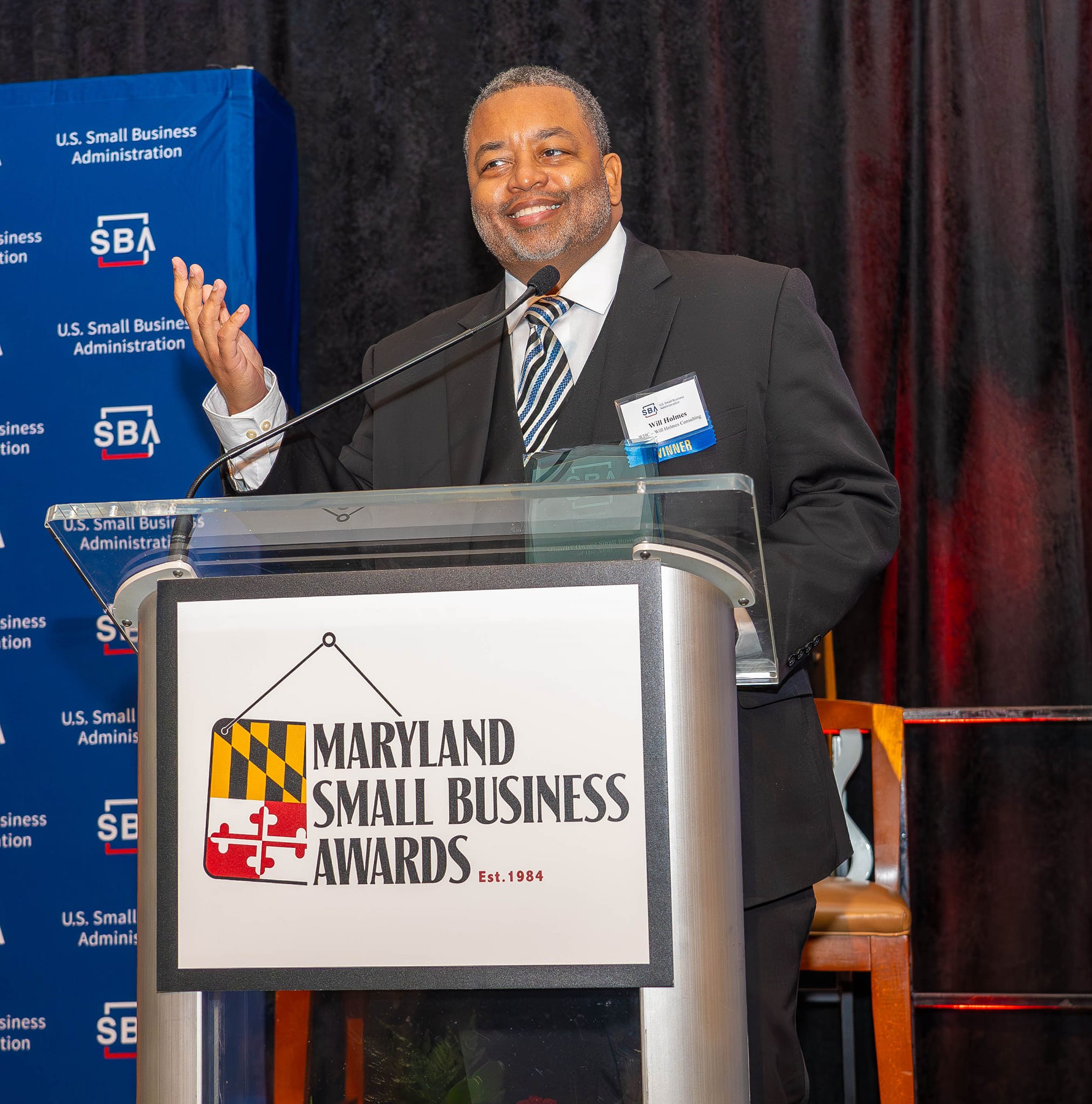
WHC hosts events for business owners to network and discuss deals. At a recent event, Founder Will Holmes asked three clients about their experience with WHC. Turn on the volume, hear about their experiences, and schedule a consultation.
How to Qualify for SBA Backed Loans up to $10 Million
How to Qualify in 2026
Qualifying is no longer just about a high credit score; it’s about "repayment ability" and meeting stricter ownership mandates.
Ownership & Residency: A major 2026 update (effective June 1) now requires 100% of the business’s ownership to be U.S. citizens or U.S. nationals. This is a shift from previous years where Lawful Permanent Residents (LPRs) were eligible.
The "10% Rule": For ownership changes, the SBA mandates a minimum 10% equity injection (down payment).
Pro Tip: You can often use a Seller Carryback Note to cover up to 7.5% of that 10%, provided the seller note is on "full standby" (no payments) for the life of the SBA loan. This means you could potentially close with only 2.5% cash out of pocket.
Management Experience: Lenders will scrutinize your resume. They want to see "transferable skills"—your background in consulting and leadership at organizations like BELL and the Chamber is exactly the kind of "qualified management" they look for.
Additional Funding Options for Buyers
While SBA loans are powerful, they are not always the fastest or most flexible path, especially for high-growth firms or those in strategic industries. In 2026, the lending market has shifted toward automated cash-flow analysis and niche-specific grants, offering some compelling alternatives for acquisition and expansion.
Here are 5 other top funding options for your next move:
1. Asset-Based Lending (ABL)
Unlike traditional loans that focus on your credit score or profitability, ABL focuses on the "liquidation value" of your assets. This is ideal if you are buying a business with significant accounts receivable, inventory, or heavy equipment.
The 2026 Edge: New AI-driven monitoring tools allow lenders to give you higher "advance rates"—sometimes up to 90% of your receivables.
Best For: Manufacturing, distribution, or staffing companies where you can leverage the target’s assets to fund the purchase.
2. Revenue-Based Financing (RBF)
RBF provides upfront capital in exchange for a fixed percentage of your monthly gross revenue (typically 2–8%). You don’t have a fixed monthly payment; instead, you pay more when business is booming and less during slow months.
The 2026 Edge: This market has exploded for SaaS and service-based businesses. It’s non-dilutive, meaning you don’t give up any equity in your company.
Best For: Operational expansion or marketing pushes where you expect a direct, measurable return on investment.
3. Seller Financing (The "Carryback")
In many M&A deals, the seller acts as the bank. You pay a down payment, and the seller holds a promissory note for the balance, usually at a fixed interest rate.
The 2026 Edge: With interest rates remaining higher than the previous decade, many sellers are more open to financing the deal themselves to ensure a higher sale price.
Best For: Acquisitions where the buyer and seller have a strong relationship. It also aligns the seller’s interest with your success, as they want to ensure you stay profitable enough to pay them back.
4. Maryland-Specific Strategic Grants (Business Boost)
The State of Maryland has significantly increased its direct-to-business funding through the Department of Housing and Community Development (DHCD).
The 2026 Edge: The Business Boost microgrant program currently offers between $20,000 and $50,000 specifically for small businesses in "Sustainable Communities" (which includes many parts of Baltimore) looking to expand. For larger tech or infrastructure projects, the Build Our Future Grant offers up to $2 million in matching funds.
Best For: Entrepreneurs looking for "free" capital to modernize operations or move into a physical storefront.
5. Equity Crowdfunding & Angel Networks
Platforms like Republic or StartEngine allow you to raise capital from hundreds of smaller investors. Alternatively, targeted angel networks—like Hivers & Strivers (which focuses on veteran-led firms)—provide larger checks along with mentorship.
The 2026 Edge: New SEC regulations in 2026 have streamlined the "Regulation Crowdfunding" (Reg CF) process, making it faster for established business owners to raise up to $5 million without the red tape of a public offering.
Best For: Expanding a brand that has a loyal community or customer base who would value owning a piece of the growth.
Traditional Commercial Loans
While SBA loans are excellent for their low down payments, traditional commercial loan products—often called "balance sheet loans"—provide more speed and fewer government-mandated "hoops." For an established enterprise, these products are the primary tools used to fund physical expansion, technological upgrades, and general scaling.
1. Commercial Term Loans
The most common vehicle for expansion, a term loan provides a lump sum of capital upfront, which is repaid over a fixed period (the "term").
Structure: Usually 3 to 7 years, though some go up to 10.
Best For: Predictable, one-time expansion costs such as opening a new office, hiring a large cohort of staff, or launching a new product line.
Key Benefit: Fixed interest rates allow for precise long-term budgeting.
2. Business Lines of Credit (LOC)
Unlike a term loan, a line of credit is revolving. You are approved for a maximum amount and can draw from it as needed.
Structure: Interest is only paid on the amount currently borrowed. In 2026, many banks offer "smart LOCs" that automatically adjust based on your real-time cash flow.
Best For: Staged expansions where costs are unpredictable, or for managing the temporary "cash flow gap" that occurs when scaling operations.
Key Benefit: Flexibility; once you pay it down, the funds become available again without a new application.
3. Equipment Financing
This is a specific loan used to purchase machinery, vehicles, or technology. The equipment itself serves as the collateral for the loan.
Structure: The loan term typically matches the "useful life" of the asset (e.g., a 5-year loan for a 5-year piece of machinery).
Best For: Manufacturing expansions, fleet additions, or upgrading IT infrastructure.
Key Benefit: Often requires a lower down payment (sometimes 0%) because the asset is high-quality collateral for the bank.
4. Owner-Occupied Commercial Mortgages
If the expansion involves buying the building your business operates in, this is the traditional alternative to an SBA 504.
Structure: Typically requires the business to occupy at least 51% of the property. Terms are often 10 to 25 years.
Best For: Buying a permanent headquarters or expanding an existing warehouse/facility.
Key Benefit: It builds equity in a tangible asset that can be used for future borrowing, and interest is often lower than unsecured business loans.
5. Commercial and Industrial (C&I) Loans
C&I loans are a broad category of loans made to corporations or businesses, rather than individuals. They are usually used for general "working capital" or to finance capital expenditures.
Structure: Can be structured as either a term loan or a line of credit, but they are often unsecured (or "signature loans") for very high-credit-score businesses.
Best For: General operational scaling, R&D, or large-scale marketing initiatives that don't have a physical asset to secure the debt.
Key Benefit: Very fast approval times for businesses with strong "Global Cash Flow."